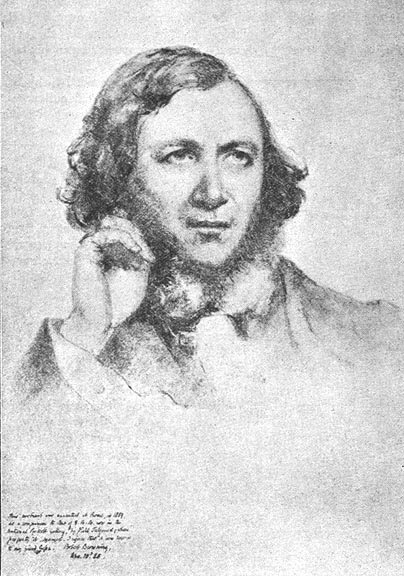
My family and are soon to "quit Norland", so I have an exceedingly busy week or two ahead which will probably keep me from posting for Browning's Bicentennial as I had planned. It's also cut the time I've devoted to writing a few of this month's reviews, so forgive their brevity.
In a Dog's Heart by Jennifer Arnold (nonfiction, audiobook, 7 ½ hours)

I'm posting this first because it is a Must Read for dog owners. Actually it's a Must Read for anyone who's ever going to be around dogs in any capacity, be it feeding the neighbors' dog while they're on vacation or having a child run towards a dog at the park.
With sections on feeding, training, first-aid and choosing a dog, it's a good first-time owner's handbook and will remind long-time owners of the responsibilities and privileges of dog ownership.
The author, Jennifer Arnold, is the founder of Canine Assistants, a foundation that provides service dogs for those with various disabilities. Her experiences provide numerous stories of the power of the canine-human connection and the astounding selflessness dogs have revealed in serving, rescuing and comforting humans.
But perhaps most valuable is Arnold's indictment of the Alpha-dominance training philosophy (popularized by Cesar Milan). Incidents of dog bites have risen as human's refuse to respect dog's indications of fear and pain (such as growling) and ascribe every behavior to a mistaken-belief in dogs' drive for dominance. Arnold presents a kind, yet balanced system of ethics to guide our relationships with dogs which cannot be ignored without further estrangement from a naturally beautiful partnership.
If only for her clear insights on how dog's minds work (hint: we've simplified them into dominance-hungry wolves), this book should be read by every dog owner. For its insights into how human's inadvertently cause “aggression” in dogs, this should be read by anyone who ever comes into contact with dogs. Real, genuine aggression in dogs, Arnold explains, “is so rare as to be statistically almost nonexistent.”
Lastly, the insights into the almost magical power of the human-canine bond, its benefits to humans,and what we owe animals, should make this required reading for every person who has ever wondered about animal's rights and their place in our world.
A Favorite Quote: "We must remember that dogs are not wolves; they are both our wards and our team-mates, but never our enemies. Our relationship [with dogs] compensates for our individual weaknesses as species and creates a whole vastly superior to the sum of its parts."
Jane Austen: A Life by Claire Tomalin (biography, 338 pages with notes which, yes, I did read)

In the first biographical work on Jane Austen (Henry Austen's biographical notice published with NA and Perusasion) it was declared “of events her life was singularly barren.” Just before chapter one, Tomalin quotes William and R.A. Austen-Leigh (I'm assuming they were James-Edward's sons) contradicting their great-uncle's words, “The uneventful nature of the author's life... has been a good deal exaggerated.” Well, the fact remains that with no surviving diaries and probably scores of letters burned, it's a little hard to write a really personal biography of Austen. (Though it's hardly discouraged dozens from trying.) But Tomalin has succeeded admirably. The work is scholarly without being pedantic and warm without romanticizing. I lapped up every drop of information on her family, her neighbors and her influences, but even less fanatical Janeites will find the depiction of life in the seventeen-and-eighteen-hundreds informative.
In a way the singular barrenness of event in Jane Austen's life and letters is one of the things that makes her my heroine. Her problems were ones that can still be mine – the pain of dependency, poverty, forced moves, and friction within the family. Jane Austen wasn't a “portrait of perfection” and sources don't leave us with a lot on her character, intellectual views, or spiritual struggles (besides the vague praise afforded posthumously by her brothers.) There are few instances of her performing morally-weighty actions, like her heroines, and her letters are almost determinedly light. Yet Tomalin gives us enough of a glimpse into her character for her to be even more one of my heroines than her heroines are – her kindness to the poor and aged and special interest in servants and dependent women.
Jane Austen's family certainly had imperfections to match any in the novels, and were sometimes quite thoughtless about her feelings and needs. Yet her love for them shines through the poems and letters she sent and I think there actually is something to the statement that she had “a temper that did not require regulation”. (Paraphrased)
A Favorite Quote: On the last page I must return to Jane Austen herself. To the child, for whom books were a refuge, offering a world that sometimes made better sense than the one she had to find her way about. To the girl whose imagination took off in startling directions as she began to see the possibilities of telling stories of her own. To the energetic young woman who loved dancing and jokes, and dreamt of a husband even as she apprenticed herself to novel writing with all the force of her intelligence. To the 25-year-old who decided she did not like people and could not write anymore; and who was tempted to make a comfortable, loveless marriage, and put the temptation behind her. To the loving sister and aunt who always made time for her family even though she would sometimes have preferred to be left to think and write in peace. To the woman who befriended governesses and servants. To the published author in the glow of achievement and mastery of her art. To the dying woman with courage to resist death by writing in its very teeth. To the person who on occasion preferred to remain silent rather than cut across the views and habits of those she loved; and who kept notes of what people said about her work, to read over to herself. This is my favorite image of Jane Austen, laughing at the opinions of the world. It is lucky she had so much laughter in her; today, the volume of opinions has swelled to something so huge that they could be laughed at forever.”
Elizabeth the Queen by Alison Weir (biography, 488 pages)

I don't know exactly why I'm fascinated by Elizabeth, but this biography amply showed her many extraordinary admiral qualities, which providence indeed seemed to have given her “for such a time as this.” Yet the book provided a few laughs at Elizabeth's constant capriciousness and prevarication as she played the marriage game. Genealogical charts made me more clear on Tudor-era names I'd frequently heard. I just wish I owned it, since its many details may be too soon forgotten.
The Story of the World, Volume 1: Ancient Times From the Earliest Nomads to the Last Roman Emperor by Susan Wise Bauer (history, audiobook of 8 hours)

This is a children's history, so I probably wouldn't have read it if it weren't on audiobook. However, I don't mind hearing a few explanations of words and concepts I fully understand while making bread or exercising. While I'm a history buff, I've tended to focus on certain places and time periods (such as the Reformation, or Victorian England) so it was fascinating to hear about ancient Egypt, Greek myths, and the Roman stories behind words and phrases we still use in modern English.
Elizabeth I by Margaret George (historical novel, audiobook of 31 hours)

Beginning with the threat of the coming Armada, and focusing on only the last third of Elizabeth's reign, this might also be appropriately titled The Rise and Fall of the Earl of Essex. While I always felt distanced from the first-person narration of Elizabeth, perhaps that was intended, since royalty of Elizabeth's mettle is enigmatic. I especially enjoyed the narration of Lettice Knollys, Elizabeth's cousin and Essex's mother, juxtaposed against Elizabeth's. Lettice's character at first seemed hard and calculating, but both she and Elizabeth mellowed subtly over the course of the long novel. The book also contains enjoyable cameos of Shakespeare, Donne, Spencer and other great men of the age.
The Scarlet Letter by Nathaniel Hawthorne (novel, 221 pages without introduction)

I looked forward to reading this novel, but didn't expect to be so exceedingly entranced by its vibrancy and power. In accordance with my sympathy for anti-heroes, I have to confess Dimmesdale is probably my favorite character. George Eliot explains it well, “That is a rare and blessed lot which some greatest men have not attained, to know ourselves guiltless before a condemning crowd... The pitiable lot is that of the man who could not call himself a martyr even though he were to persuade himself that the men who stoned him were but ugly passions incarnate – who knows that he is stoned, not for professing the Right, but for not being the man he professed to be.”
Planned Reading for May Includes:
Lady Susan (reread)
Sense and Sensibility (reread)
Eden's Outcasts by John Matteson
Uncle Tom's Cabin